Technology continues to evolve at an incredible pace, transforming the way people live, work, communicate, and do business. As we move through 2026, several groundbreaking innovations are redefining industries and creating new opportunities worldwide. From artificial intelligence and quantum computing to advanced cybersecurity and sustainable technologies, the digital landscape is experiencing remarkable growth.
Understanding the Latest Technology Trends 2026 is essential for businesses, students, professionals, and technology enthusiasts who want to stay ahead in an increasingly competitive world. This article explores the most influential technology trends expected to dominate 2026 and their impact on society.
Why Technology Trends Matter in 2026
Technology Trends are more than just industry buzzwords. They influence economic growth, business strategies, consumer behavior, and global innovation. Organizations that adapt quickly to emerging technologies often gain a competitive advantage, while individuals who develop relevant skills can access better career opportunities.
The rapid adoption of digital solutions has accelerated innovation across healthcare, education, finance, manufacturing, transportation, and entertainment sectors. As a result, keeping up with technological advancements has become more important than ever.
Artificial Intelligence Becomes More Intelligent
Artificial Intelligence (AI) remains the most transformative technology trend in 2026. AI systems are becoming more advanced, capable of understanding complex tasks, generating content, analyzing large datasets, and supporting decision-making processes.
- Advanced AI assistants for businesses
- AI-powered content creation tools
- Intelligent customer support systems
- Automated data analysis and reporting
- Personalized recommendations across platforms
Businesses are increasingly integrating AI into their daily operations to improve efficiency, reduce costs, and enhance customer experiences.
Generative AI Revolution
Generative AI continues to reshape digital creativity and productivity. These systems can create text, images, videos, software code, music, and marketing materials with minimal human input.
- Faster content production
- Improved software development
- Enhanced customer engagement
- Reduced operational costs
- Increased workplace productivity
Companies across industries are investing heavily in generative AI solutions to streamline workflows and accelerate innovation.
Quantum Computing Reaches New Milestones
Quantum computing is progressing rapidly and has become one of the most exciting technology trends in 2026. Unlike traditional computers, quantum computers process information using quantum bits, enabling them to solve highly complex problems.
- Drug discovery and healthcare research
- Financial modeling
- Climate simulations
- Advanced encryption
- Logistics optimization
Although quantum computing is still developing, its future potential is enormous and could revolutionize multiple industries.
Expansion of 6G Communication Technology
While 5G continues to expand globally, researchers and telecommunications companies are making significant progress toward 6G technology.
- Ultra-fast internet speeds
- Near-zero latency
- Enhanced virtual reality experiences
- Improved smart city infrastructure
- Better connectivity for billions of devices
The arrival of 6G will support next-generation applications that require extremely fast and reliable communication networks.
Internet of Things (IoT) Gets Smarter
The Internet of Things continues to connect devices, sensors, and systems across homes, cities, and industries. In 2026, IoT devices are becoming more intelligent thanks to AI integration.
- Smart homes
- Wearable health devices
- Connected vehicles
- Industrial automation
- Smart agriculture
The combination of AI and IoT enables real-time monitoring, predictive maintenance, and enhanced automation.
Cybersecurity Evolves Against Advanced Threats
As digital transformation grows, cybersecurity becomes increasingly critical. Cybercriminals are using sophisticated methods to target businesses and individuals.
- AI-powered threat detection
- Zero Trust security models
- Biometric authentication
- Cloud security enhancements
- Advanced ransomware protection
Organizations are investing heavily in cybersecurity solutions to protect sensitive information and maintain customer trust.
Sustainable and Green Technology
Environmental concerns are driving the adoption of sustainable technology solutions. Businesses and governments are focusing on reducing carbon emissions and improving energy efficiency.
- Renewable energy systems
- Energy-efficient data centers
- Smart power grids
- Electric vehicle advancements
- Sustainable manufacturing technologies
Green technology not only benefits the environment but also helps organizations reduce operational costs.
Edge Computing Gains Momentum
Edge computing brings data processing closer to where information is generated. This reduces latency and improves system performance.
- Faster response times
- Reduced network congestion
- Improved security
- Better reliability
- Enhanced real-time analytics
Industries such as healthcare, manufacturing, and transportation are increasingly adopting edge computing solutions.
Digital Twins Transform Industries
Digital twin technology creates virtual replicas of physical systems, machines, or processes. Organizations use these virtual models to monitor performance and predict outcomes.
- Manufacturing optimization
- Smart city planning
- Healthcare simulations
- Infrastructure management
- Supply chain monitoring
Digital twins help companies improve efficiency while reducing risks and operational expenses.
Extended Reality (XR) and the Metaverse
Extended Reality combines Virtual Reality (VR), Augmented Reality (AR), and Mixed Reality (MR). In 2026, XR technologies continue to improve user experiences across various sectors.
- Employee training programs
- Virtual collaboration
- Gaming and entertainment
- Medical education
- Product visualization
The metaverse concept continues to evolve, providing immersive digital environments for work, learning, and social interaction.
Robotics and Automation Expansion
Advanced robotics are becoming more capable and affordable. Businesses are using robots to automate repetitive tasks and improve productivity.
- Collaborative robots (cobots)
- Autonomous delivery systems
- Warehouse automation
- Healthcare robots
- Agricultural robots
Automation allows organizations to operate more efficiently while reducing human error.
Blockchain Beyond Cryptocurrency
Blockchain technology is expanding beyond digital currencies and finding applications across multiple industries.
- Supply chain transparency
- Digital identity verification
- Smart contracts
- Healthcare records
- Secure transactions
Its decentralized nature improves security, transparency, and trust between stakeholders.
Biotechnology and Health Technology Innovations
Healthcare technology is advancing rapidly through the integration of AI, wearable devices, and biotechnology.
- Personalized medicine
- Remote patient monitoring
- AI-assisted diagnostics
- Smart medical devices
- Genomic research
These innovations are improving patient outcomes and making healthcare more accessible.
Autonomous Transportation Systems
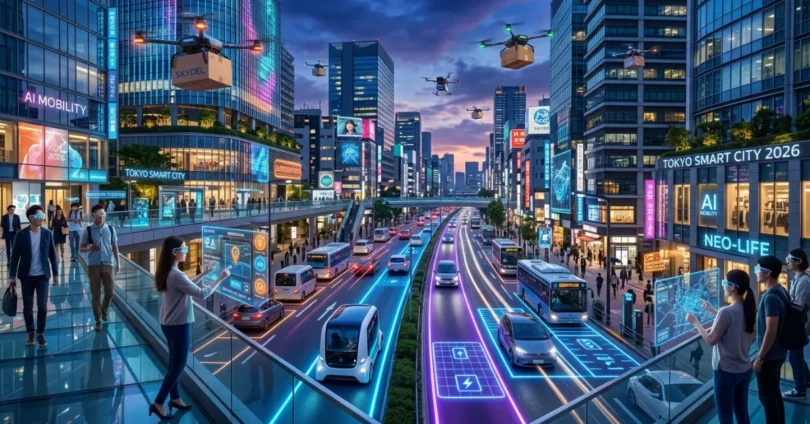
Self-driving technologies continue to advance in 2026. Autonomous vehicles are becoming safer and more reliable through improved sensors and AI systems.
- Self-driving cars
- Autonomous trucks
- Smart traffic systems
- Drone delivery services
- Intelligent public transportation
These developments have the potential to improve safety and reduce transportation costs.
Cloud Computing Continues to Dominate
Cloud technology remains the foundation of modern digital infrastructure.
- Multi-cloud strategies
- Hybrid cloud solutions
- Cloud-native development
- Serverless computing
- Enhanced cloud security
Organizations rely on cloud platforms for flexibility, scalability, and cost efficiency.
Skills Needed for Future Technology Careers
As technology evolves, professionals need new skills to remain competitive.
- Artificial Intelligence
- Machine Learning
- Cybersecurity
- Data Science
- Cloud Computing
- Software Development
- Blockchain Development
- Digital Marketing Analytics
Continuous learning and professional development are essential for career growth in the digital age.
Challenges Associated with Emerging Technologies
While technological innovation offers numerous benefits, it also presents challenges.
- Privacy concerns
- Cybersecurity risks
- Ethical AI issues
- Regulatory compliance
- Job displacement through automation
- Technology accessibility gaps
Governments, businesses, and technology providers must work together to address these challenges responsibly.
The Future Outlook
The future of technology looks exceptionally promising. Emerging innovations will continue to transform industries, improve efficiency, and create new economic opportunities. Organizations that embrace technological change will be better positioned for long-term success.
The convergence of AI, cloud computing, IoT, cybersecurity, biotechnology, and sustainable technologies will drive the next phase of digital transformation across the globe.
Common FAQs About Latest Technology Trends 2026
Some Faqs of Latest Technology Trends 2026:
What are the latest technology trends in 2026?
The most significant trends include Artificial Intelligence, Generative AI, Quantum Computing, 6G technology, Edge Computing, Cybersecurity advancements, IoT, Blockchain, Robotics, and Sustainable Technology.
Why is Artificial Intelligence important in 2026?
AI helps organizations automate tasks, improve decision-making, enhance customer experiences, and increase operational efficiency.
How is cybersecurity changing in 2026?
Cybersecurity is adopting AI-powered threat detection, Zero Trust architectures, biometric authentication, and advanced ransomware protection methods.
What industries benefit most from emerging technologies?
Healthcare, finance, manufacturing, transportation, education, retail, and entertainment are among the industries experiencing major benefits.
What skills should students learn for future technology jobs?
Students should focus on AI, Machine Learning, Data Science, Cybersecurity, Cloud Computing, Software Development, and Blockchain technologies.
Will automation replace human jobs?
Automation may replace some repetitive tasks, but it will also create new opportunities that require technical, creative, and analytical skills.
Conclusion
The Latest Technology Trends 2026 highlight a future driven by innovation, intelligence, and digital transformation. Artificial Intelligence, Quantum Computing, Cybersecurity, Edge Computing, Robotics, Blockchain, and Sustainable Technology are shaping the next generation of solutions that will influence businesses and everyday life.
As technology continues to advance, individuals and organizations that stay informed and adapt to these changes will gain significant advantages. Embracing innovation today is the key to thriving in the technology-driven world of tomorrow.